

My accomplishments during my military service earned me 29 commendations, including the Air Force Distinguished Flying Cross, the Air Medal, the Air Force Commendation Medal, and the Humanitarian Service Medal. When I left the military, I was one of the most highly decorated in the command.
 The base commander and my supervisors loved it when I put on my dress blues and participated in the various parades and celebrations on base, especially Memorial Day and the 4th of July. I've met royalty. A crowned prince, a princess of a city state, a queen. I've met and dined with presidents, including George W. Bush and Bill Clinton, and a few generals, including Colin Powell and H. Norman Schwarzkopf. They've offered their hands to shake, given toasts in my honor for my duty, for the distinguished flying cross pinned to my chest. Captains of industry have offered me the sky and moon for my ideas then robbed me blind, I've been praised for the hundreds of published works I've written over decades, and damned for the same. I've survived the worst of abject poverty, risen to the heights of high society, and fallen to the ugliest of depths. This is life, this is the life of a combat veteran.
 With a somber 4th of July just behind us, yet another national-wide lockdown looming ahead of us, it’s a good time to look back and reflect. Much of my childhood is filled with pain, poverty and hunger, as I write about here. I served my country in foreign lands and during several tours of duty in combat zones, including two combat tours in Iraq. I flew on 32 combat missions from the opening days of the war to its end. In that time, there was never a day I didn’t stare death in the face and there was never a day death didn't stare back. AAA, SAMs and more came at us as we flew our missions.
  Because of that service, I will always know that when the darkest of hours arrives I will not hesitate. When asked, I answered. When called, I went. When death stared up from the void, I did not fear. I gave because it was my duty and because I felt it was the right thing to do.
I wrote about some of my experiences in my military memoir, Stormjammers: The Extraordinary Story of Electronic Warfare Operations in the Gulf War, which was featured in a full-page review in the Journal of Electronic Defense and on NPR. Originally released in 2006, the book was re-released in 2016 for the 25th anniversary of the war as Air War: The Incredible True Story of the Combat Flyers.
Though a memoir, the book is largely a tribute to the men and woman I served with. It's written to be light, not as dark as the terrors that surrounded us or the terrors that stared up at us from the void. I suppose I could have focused on the death and the dying, the terror and the mayhem, but I was more interested in telling the story of the day to day, the story of the lives the war affected.
I did this because the younger me, the young man who was, was filled with light and hope even though the traumas I endured rock me to my core. The older, more jaded me, probably would have written a much darker account, an account that delved into the many we lost due to mental break down, the many who went home broken even before the battles ended. The older me, probably would have named names of those who refused to go or to fly, would have recounted affairs, would have told you more about the little red pills--speed--they gave those of us who were left to keep going as our numbers dwindled and dwindled. That me, however, was not the me who wrote the book or recorded the memories in the journals that were the basis of the book.
Though a memoir, the book is largely a tribute to the men and woman I served with. It's written to be light, not as dark as the terrors that surrounded us or the terrors that stared up at us from the void. I suppose I could have focused on the death and the dying, the terror and the mayhem, but I was more interested in telling the story of the day to day, the story of the lives the war affected.
I did this because the younger me, the young man who was, was filled with light and hope even though the traumas I endured rock me to my core. The older, more jaded me, probably would have written a much darker account, an account that delved into the many we lost due to mental break down, the many who went home broken even before the battles ended. The older me, probably would have named names of those who refused to go or to fly, would have recounted affairs, would have told you more about the little red pills--speed--they gave those of us who were left to keep going as our numbers dwindled and dwindled. That me, however, was not the me who wrote the book or recorded the memories in the journals that were the basis of the book.
If you read my memoir and I hope you do, I hope the book opens a window for you as big as the original experiences did for me. After combat, the world never seemed quite the same. The return to normalcy was a strange experience, never quite accomplished. I don’t, in fact, think I ever slowed down or ever quite touched the earth after those experiences. For it was afterward that everything in this world changed—that everything in this world became so clear. And afterward that I set my sights on the future and never looked back.

While you're reading this, I’d like to introduce you to the Distinguished Cross National Memorial Act and the related National Memorial at March Field Air Museum in Riverside, California. As a combat veteran and recipient of the Distinguished Flying Cross, I had never before heard of the act or the memorial until 2018 and so I thought if I hadn’t heard of it many others might not have heard of it before either. I don’t really keep up with what’s happening with such things as it’s all really painful for me in truth. But something to think about this 4th.
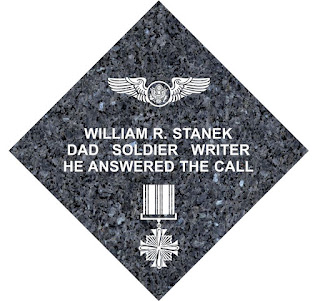
Here's the background on the act: The Distinguished Flying Cross National Memorial Act was introduced on January 22, 2013 by Rep. Ken Calvert (R, CA-42). It was referred to the United States House Committee on Natural Resources and the United States House Natural Resources Subcommittee on Public Lands and Environmental Regulation. It was reported by the Committee alongside House Report 113-79 on May 17, 2013. On October 25, 2013, House Majority Leader Eric Cantor announced that H.R. 330 would be on the House schedule for the week of October 28, 2013. The bill was considered under the suspension of the rules. On October 29, 2013, the House voted to passed the bill by a voice vote. The United States Senate voted on July 9, 2014 to pass the bill with unanimous consent. On July 25, 2014, President Barack Obama signed the bill into law. You can learn more about the memorial at the website for the memorial.

While you're reading this, I’d like to introduce you to the Distinguished Cross National Memorial Act and the related National Memorial at March Field Air Museum in Riverside, California. As a combat veteran and recipient of the Distinguished Flying Cross, I had never before heard of the act or the memorial until 2018 and so I thought if I hadn’t heard of it many others might not have heard of it before either. I don’t really keep up with what’s happening with such things as it’s all really painful for me in truth. But something to think about this 4th.

Here's the background on the act: The Distinguished Flying Cross National Memorial Act was introduced on January 22, 2013 by Rep. Ken Calvert (R, CA-42). It was referred to the United States House Committee on Natural Resources and the United States House Natural Resources Subcommittee on Public Lands and Environmental Regulation. It was reported by the Committee alongside House Report 113-79 on May 17, 2013. On October 25, 2013, House Majority Leader Eric Cantor announced that H.R. 330 would be on the House schedule for the week of October 28, 2013. The bill was considered under the suspension of the rules. On October 29, 2013, the House voted to passed the bill by a voice vote. The United States Senate voted on July 9, 2014 to pass the bill with unanimous consent. On July 25, 2014, President Barack Obama signed the bill into law. You can learn more about the memorial at the website for the memorial.

A story that’s not in my military memoir but perhaps should be in my next is about the dangers soldiers face not in the field of combat but in the bases where they are housed and should be safe. My wife’s second miscarriage was a clue that something was terribly wrong. I thought it was the stress of being a combat flyer’s wife, constant deployments, or the subsequent ever-changing schedule when I worked inside the secretive underground facility known as the Tunnel. I never imagined that it was due to the air we breathed, the water we drank or the soil beneath our feet, but it likely was as lead from lead-based paints had leached into the soil we used for gardening and other toxic substances were throughout our base housing and the places we worked.

No one tells you when you join the military you’re risking not just your life but your health—and that of your family and even your unborn children. As Newsweek said in its July 25, 2014 cover story, the US Military is supposed to protect the country’s citizens and soldiers and not poison them.
Many of the worst facilities are closed or closing. However, it’s not like the toxins in the soil and ground water are going to stay where they are. They’re going to continue to pollute and contaminate adjacent facilities until they are cleaned up once and for all. What’s waiting beyond the 141 highly toxic bases and facilities? Well, the Department of Defense has identified 39,000 contaminated locations so far, from areas as small as a building to as large as an airfield, and those locations are spread across many of the 4,127 DOD installations located in the United States.
As a soldier who was deployed overseas for many years, I was stationed at Department of Defense facilities all over the world and I can’t help but wonder what toxic nightmare is lurking at the thousands of Department of Defense facilities that are located outside the United States. What I suspect is that there are likely as many contaminated locations and highly toxic sites at Department of Defense facilities located outside the US as there are inside the US.
All those years ago, I didn’t know about these issues or that toxins were possibly changing my life and my family, but I guessed there was something going on beyond stress. I started asking questions, and a healthcare worker who treated my wife suggested I look at environmental factors in our home and workplaces.

Will arrived a few weeks early, but healthy. For us, it was a new beginning and a hope for the future of our family.
Thanks for reading,
Robert Stanek


