Showing posts with label author. Show all posts

7.10.2020

Memories of the Long Road Home

My accomplishments during my military service earned me 29 commendations, including the Air Force Distinguished Flying Cross, the Air Medal, the Air Force Commendation Medal, and the Humanitarian Service Medal. When I left the military, I was one of the most highly decorated in the command. 

The base commander and my supervisors loved it when I put on my dress blues and participated in the various parades and celebrations on base, especially Memorial Day and the 4th of July. I've met royalty. A crowned prince, a princess of a city state, a queen. I've met and dined with presidents, including George W. Bush and Bill Clinton, and a few generals, including Colin Powell and H. Norman Schwarzkopf. They've offered their hands to shake, given toasts in my honor for my duty, for the distinguished flying cross pinned to my chest. Captains of industry have offered me the sky and moon for my ideas then robbed me blind, I've been praised for the hundreds of published works I've written over decades, and damned for the same. I've survived the worst of abject poverty, risen to the heights of high society, and fallen to the ugliest of depths. This is life, this is the life of a combat veteran.

With a somber 4th of July just behind us, yet another national-wide lockdown looming ahead of us, it’s a good time to look back and reflect. Much of my childhood is filled with pain, poverty and hunger, as I write about here. I served my country in foreign lands and during several tours of duty in combat zones, including two combat tours in Iraq. I flew on 32 combat missions from the opening days of the war to its end. In that time, there was never a day I didn’t stare death in the face and there was never a day death didn't stare back. AAA, SAMs and more came at us as we flew our missions. 

Because of that service, I will always know that when the darkest of hours arrives I will not hesitate. When asked, I answered. When called, I went. When death stared up from the void, I did not fear. I gave because it was my duty and because I felt it was the right thing to do.

I wrote about some of my experiences in my military memoir, Stormjammers: The Extraordinary Story of Electronic Warfare Operations in the Gulf War, which was featured in a full-page review in the Journal of Electronic Defense and on NPR. Originally released in 2006, the book was re-released in 2016 for the 25th anniversary of the war as Air War: The Incredible True Story of the Combat Flyers.

Though a memoir, the book is largely a tribute to the men and woman I served with. It's written to be light, not as dark as the terrors that surrounded us or the terrors that stared up at us from the void. I suppose I could have focused on the death and the dying, the terror and the mayhem, but I was more interested in telling the story of the day to day, the story of the lives the war affected.

I did this because the younger me, the young man who was, was filled with light and hope even though the traumas I endured rock me to my core. The older, more jaded me, probably would have written a much darker account, an account that delved into the many we lost due to mental break down, the many who went home broken even before the battles ended. The older me, probably would have named names of those who refused to go or to fly, would have recounted affairs, would have told you more about the little red pills--speed--they gave those of us who were left to keep going as our numbers dwindled and dwindled. That me, however, was not the me who wrote the book or recorded the memories in the journals that were the basis of the book.

If you read my memoir and I hope you do, I hope the book opens a window for you as big as the original experiences did for me. After combat, the world never seemed quite the same. The return to normalcy was a strange experience, never quite accomplished. I don’t, in fact, think I ever slowed down or ever quite touched the earth after those experiences. For it was afterward that everything in this world changed—that everything in this world became so clear. And afterward that I set my sights on the future and never looked back.

While you're reading this, I’d like to introduce you to the Distinguished Cross National Memorial Act and the related National Memorial at March Field Air Museum in Riverside, California. As a combat veteran and recipient of the Distinguished Flying Cross, I had never before heard of the act or the memorial until 2018 and so I thought if I hadn’t heard of it many others might not have heard of it before either. I don’t really keep up with what’s happening with such things as it’s all really painful for me in truth. But something to think about this 4th.
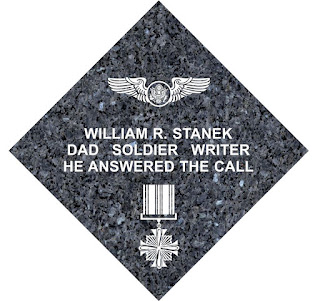
Here's the background on the act: The Distinguished Flying Cross National Memorial Act was introduced on January 22, 2013 by Rep. Ken Calvert (R, CA-42). It was referred to the United States House Committee on Natural Resources and the United States House Natural Resources Subcommittee on Public Lands and Environmental Regulation. It was reported by the Committee alongside House Report 113-79 on May 17, 2013. On October 25, 2013, House Majority Leader Eric Cantor announced that H.R. 330 would be on the House schedule for the week of October 28, 2013. The bill was considered under the suspension of the rules. On October 29, 2013, the House voted to passed the bill by a voice vote. The United States Senate voted on July 9, 2014 to pass the bill with unanimous consent. On July 25, 2014, President Barack Obama signed the bill into law. You can learn more about the memorial at the website for the memorial.


A story that’s not in my military memoir but perhaps should be in my next is about the dangers soldiers face not in the field of combat but in the bases where they are housed and should be safe. My wife’s second miscarriage was a clue that something was terribly wrong. I thought it was the stress of being a combat flyer’s wife, constant deployments, or the subsequent ever-changing schedule when I worked inside the secretive underground facility known as the Tunnel. I never imagined that it was due to the air we breathed, the water we drank or the soil beneath our feet, but it likely was as lead from lead-based paints had leached into the soil we used for gardening and other toxic substances were throughout our base housing and the places we worked.

No one tells you when you join the military you’re risking not just your life but your health—and that of your family and even your unborn children. As Newsweek said in its July 25, 2014 cover story, the US Military is supposed to protect the country’s citizens and soldiers and not poison them.

Throughout the United States, there are 141 military bases and related Department of Defense facilities on the Environmental Protection Agency’s superfund list and the National Priorities List for cleanup—and that list of 141 isn’t all inclusive by any means. It is simply a list of the worst of the worst, bases and facilities with toxic contamination so bad that the EPA has assigned them its highest priority for cleanup due to unacceptable risks to human health.

Many of the worst facilities are closed or closing. However, it’s not like the toxins in the soil and ground water are going to stay where they are. They’re going to continue to pollute and contaminate adjacent facilities until they are cleaned up once and for all. What’s waiting beyond the 141 highly toxic bases and facilities? Well, the Department of Defense has identified 39,000 contaminated locations so far, from areas as small as a building to as large as an airfield, and those locations are spread across many of the 4,127 DOD installations located in the United States.

As a soldier who was deployed overseas for many years, I was stationed at Department of Defense facilities all over the world and I can’t help but wonder what toxic nightmare is lurking at the thousands of Department of Defense facilities that are located outside the United States. What I suspect is that there are likely as many contaminated locations and highly toxic sites at Department of Defense facilities located outside the US as there are inside the US.

All those years ago, I didn’t know about these issues or that toxins were possibly changing my life and my family, but I guessed there was something going on beyond stress. I started asking questions, and a healthcare worker who treated my wife suggested I look at environmental factors in our home and workplaces.

In our pre-World War II base housing, lead paint often was prevalent and possibly other toxic substances. We dug up the garden which was alongside the house, stopped drinking the tap water, and made other changes. With these changes, our overall health seemed to improve. Months later, my wife got pregnant again and this time, she carried the pregnancy well and my son, Will, was born.


Will arrived a few weeks early, but healthy. For us, it was a new beginning and a hope for the future of our family.

Thanks for reading,

Robert Stanek

6.03.2016

How Betsy Mitchell, Sheila Gilbert, Diana Gill, Beth Meacham, Jim Minz, Tom Doherty, and Other Publishing Legends Helped Launch My Writing Career

"The writing style is strong... The ideas are interesting and the writing good," wrote Betsy Mitchell, who went on to become Editor-in-Chief at Del Rey. "The fantasy world you have created is truly wonderful and rich. Your characters seem real and full of life," wrote Sheila Gilbert, who is a co-owner of DAW Books. Both were written in reply letters after the editors requested the full manuscript for Keeper Martin’s Tale, my debut novel of epic fantasy. This was the 1990s and these heady statements, even though they ultimately ended in rejection letters, were the fuel that drove my writing.

To say that Keeper Martin’s Tale made the rounds in the 1990s is an understatement. My queries went out month after month, year after year, and usually one submission at a time while I waited and waited and waited for a response. Rarely, like a white whale half seen in the distance, but frequently enough to keep me motivated, my queries were answered with requests to see the full manuscript as I mentioned.

Over a period of years and with a variety of manuscripts, including fantasy, sci-fi and more, I received exciting responses from Diana Gill, Beth Meacham, Jim Minz, Toni Weisskopf, Betsy Wollheim, Terri Windling and others. One requested full manuscript submission even made it all the way to Tom Doherty, founder of Tor Books.

These types of requests and responses often came with letters that had handwritten notes or notations signed by the editors themselves where they’d say wonderful things. One executive editor said "It's a creative, provoking, and above all, thoughtful story," before going on to talk about how hard it was to launch a new book or series by a new writer.

How hard it was to publish an unknown was a frequent mantra. The book is very good but we want more, another. Some suggested I try breaking out with short stories, a collection or nonfiction first, and then once published try to publish fiction. Undaunted, I framed and pinned up some of the best responses and rejection letters as I went and used them as inspiration to keep writing. Other writers I knew weren’t even getting past the query letter. Meanwhile, I was getting regular requests for full manuscripts.

One editor finally told me quite matter-of-factly that the story I created wasn’t right for the publisher’s line of books. Epic quests like Terry Brook’s Shannara were what publishers were publishing and readers were buying. The publisher didn’t quite know what to do with the type of story I had written.

Keeper Martin’s Tale and the other Ruin Mist books were, at their heart, a story of intrigue between two powerful families: The House of Alder and the House of Tyr’anth. Epic quests were a part of the story, but they weren’t the story.

Versions of the books that got the best response were the ones where I submitted the story of Adrina, Vilmos and Seth as separate chapters. Chapter 1 began Adrina’s story. Chapter 2, Vilmos’. Chapter 3, Seth’s. Chapter 4 continued Adrina’s story, Chapter 5 Vilmos’ and so on. But even though the approach attracted, I was told repeatedly in the end that the approach would never sell. No one would buy a book where the story switched to a different character every chapter, especially when later in the books there were so many different characters. Any reader of current fantasy fiction knows how wrong they were about that.

Wrong or not, their words directed my efforts and my writing. My first big break came because of the frequent insistence that I try breaking in with nonfiction or other types of writing, that once I was published and a known quantity I would have an easier time selling my lengthy fantasy epic and other works of fiction.

The break came when I sold an editor at Macmillan on a proposal for a technical how-to book. At the time, I was one of a select few with a strong background in writing and substantial technical expertise in this new experiment called the World Wide Web. Originally, I was supposed to just be a contributor to a book in progress, but the acquisition editor liked my approach, ideas and writing so much that eventually my approach was adopted instead and I took ownership and wrote over 800 pages of the 1000-page work.

The book became a top-seller for the publisher and put me on the bestseller list. I was immediately asked by Macmillan to write another book. That second book became a blockbuster bestseller and my career as a writer was established in grand style. My biggest moment back then was when I walked into a Borders and saw two floor-to-chest-high stacks of the book. Now, this was also a 1000-page book, but it was still a sight to behold. That book and the ones that followed sold like hotcakes at $49.99 - $79.99 each, and that was the 1990s.

Twenty years later, I am now the author of nearly 200 full-length works of fiction and nonfiction. My books have been published and/or distributed by nearly every major publisher. The big ones at least, including O’Reilly Media, Simon & Schuster, McGraw Hill, Pearson Education, Microsoft, and Random House.

Not bad for a guy who spent all those years with his face pressed against the glass, trying to break in.


Thanks for reading, I’m William Robert Stanek, Microsoft’s #1 author for nearly 20 years, and author of over 200 topselling books.

Stay in touch with Robert Stanek by connecting on facebook at https://www.facebook.com/robertstanekauthor or on twitter at http://twitter.com/robertstanek.

11.06.2014

Showcasing You, the Author, and Your Books at Trade Shows, Book Fairs, and Genre Cons

I'm Robert Stanek and today I'm talking about trade shows, book fairs, and genre cons. As a successful author whose works have been showcased around the world, I often get questions from other authors about how to effectively use these events to sell books. Previously, I blogged about selling your rights at trade shows, taking your work to Hollywood, and other related topics.

Many authors seem to think trade shows, book fairs, and genre cons are all about selling. But in reality, these events aren't necessarily about selling anything at all. You, as an author, should be there mostly to build relationships and industry connections.

In the early 2000s, my books and I were at nearly every regional, national, and international show for a number of years. A steady, multi-year investment landed numerous rights and distribution deals:

My William Stanek books have been translated into 34 languages and counting
My Robert Stanek books have been translated into 15 languages and counting

It took a great commitment of time, capital, and resources to make those deals possible. The publishing landscape has changed considerably since the early 2000s, however.

Today, I would, and do, approach trade shows, book fairs, and genre cons very differently. For starters, you're going to have better luck at these types of events if you have several creative works, rather than a single published work.

As an independent with several works available, you're going to have the most success at regional shows, including the regional shows from:

California Library Association
New York Library Association
New York State Reading Association
Michigan Reading Association
Texas Library Association
Connecticut Library Association
Pennsylvania School Library Association
Florida Library Association
New Jersey Library Association
National Education Association
Pennsylvania Library Association
Illinois Library Association
California Library Association
New York State Reading Association
New England Library Association

Note that most of these regional shows are either "library associations" or "reading associations". Here, you are connecting with library staff, school library staff, teachers, school administrators, readers, and others. If your books aren't available to libraries or schools, you'll want to approach the library shows very differently than you would otherwise.

Regional shows can be expensive, so you may want to stick with ones in your area before you try anything outside your local area. Don't spend money on tables or booths without first getting as much information as you can. You also may want to attend one or more of these events beforehand.

An even better idea? Build up to something like this before you spend any money. My recommendation: regional independent bookseller organizations and shows.

Regional independent bookseller organizations are excellent resources, and it's good to get to know the organization in your area to see if it and you are a fit. Regional indie bookseller organizations include:

Pacific Northwest Booksellers Association (PNBA)
Southern Independent Booksellers Alliance (SIBA)
New Atlantic Independent Booksellers Association (NAIBA)
Great Lakes Independent Booksellers Association (GLIBA)
Midwest Independent Booksellers Association (MIBA)
New England Independent Booksellers Association (NEIBA)
Mountains and Plains Independent Booksellers Association (MPIBA)
Southern California Independent Booksellers Association (SCIBA)
Northern California Independent Booksellers Association (NCIBA)

These organizations also host book shows. Attend the shows hosted by these organizations, learn how they work, and see if you think they might work for you and your books.

With some experience at regional shows and with regional organizations, you might want to look to national and international shows. Shows of this type, I recommend include:

American Library Association Midwinter
Bologna Children's Book Fair
London Book Fair
BookExpo America
American Library Association Annual
Beijing International Book Fair
American Association of School Librarians

International shows have the most potential, especially the London, Beijing, and Frankfurt shows. At these international shows you can have tremendous success selling translation and other rights to your works.

Attending trade shows, book fairs, and genre cons can be expensive. Don't spend a dime before you take the time to research the aforementioned options to determine whether any of them are for you.

With any of these shows, whether a regional, national or international trade show, you don't have to attend personally. There are many organizations that will host and showcase your books for you. Thus, rather than spend $250 for a table and $625 on travel expenses to attend one show, you could pay one of these hosting organizations a flat fee to showcase you and your books at multiple shows for around the same amount of money. For example, it may cost $125 to showcase one book at one show or $350 for a shelf in a display that allows you to showcase 5, 6, or 7 books.

Hope this helps!

Robert Stanek

8.05.2014

Alexi Lawless: Complicated Creatures

Alexi Lawless is a thriller author, and her debut novel, Complicated Creatures: Part One, sets the stage for a trilogy that features a strong female lead character, Samantha Wyatt.

With her debut novel already hitting Amazon Top 100 lists in International Thrillers & Mysteries as well as Romantic Suspense since its release, Lawless has not stopped writing. She published a novella, Complicated Creatures 1.5, available free on her website at AlexiLawless.com.

Her next book, Complicated Creatures: Part Two is/was released on October 24, 2014.
"Alexi Lawless is a brilliant writer! Her new emotionally charged provocative novel, Complicated Creatures: Part One, is filled with excitement, sensuality and suspense. Reading it left me breathless more than once, for a variety of reasons and left me wanting for more!" -- Don D. Mann, author of Inside SEAL Team SIX, (Hunt series)
Q & A with Alexi Lawless

Your bio says you craved strong heroines and decided to write what you want to read. Who are your favorite heroines from books, and what do you most enjoy about 
them?

I’ve always been a fan of Anne Rice’s heroines. Whether it was Merrick, of the Mayfair witches or Lisa, the whip-wielding dominatrix of  Exit to Eden, I liked that her female leads have distinct personalities, their own individual agendas and motivations and while they were flawed characters or had clear issues to work through, they were often smart, self-reliant and gutsy.

From more recent work, I really thoroughly enjoyed Olivia Kaspen’s character in Tarryn Fisher’s The Opportunist and Thief.  She slices like a knife but still manages to be so vulnerable, it’s easy to
relate to her, even if when you’re horrified by her decisions.

Who or what inspired Sam?

Honestly,  I took what I liked most about male leads in some of my favorite stories and turned the whole thing on its head. I started thinking, “What if James Bond were a woman? What if she was the head of the multinational corporation? What if she led a team of commandos from all over the world--what would that be like?”

And as I considered all the possibilities, she became crystal clear in my mind. I saw a modern Pallas Athena with true grit, style and the kind of savvy we admire but rarely see in female characters in a romance genre. Samantha’s no wilting flower, and she doesn’t want for much, so that makes for an intriguing question--what kind of man can get a woman like that? And would she even let him?

Why Chicago?

I was lucky enough to live in Chicago on-and-off a few years while I was breaking my teeth in corporate and outside of the nine months of winter, I absolutely LOVED that city.  It’s got all the amenities of a major city with a small-town friendliness!  It’s also incredibly easy to get almost anywhere in the world from O’Hare when the jets are running on time, which the traveler in my really loves.

I used to live right off of Michigan Avenue and walk through Grant Park nearly every day, particularly in the summer.  Summertimes in Chicago are unparalleled for me. I thoroughly enjoyed all the music festivals, outdoor art exhibits, and food trucks that city had to offer, in addition to fine cuisine (God Bless Charlie Trotter’s soul, RIP) and of course, the bar scene.

At the time I lived there, The Blackstone was being renovated and I used to think…”Man, I wonder what it must be like to live in a building like that?”  When the hotel finally opened, I treated myself, my mother and my aunt to a weekend there, so when you read scenes about “The
Whitney”, you can better imagine which building I had in mind.

If you’re from Chicago or an avid fan, there’ll be plenty of places and venues in this book you’ll recognize. And if you’ve never been-- I highly recommend a visit, particularly in early summer or early fall.  It’s just a gorgeous city with so many amazing things to offer.

3.10.2014

Long, Hard Slog Up the Middle: A Writer's Journey Part 1

I’ve been a writer for more than 30 years. I finished my first full-length novel in 1986, won my first writing award in 1991, and signed my first book contract in 1994. Since then, I've gone on to write more than 150 books, which have been read by readers all around the world.

I earned my stripes in this crazy business when I wrote for many years for the simple pleasure of writing itself. It wasn’t until 1994 that I signed my first contract. It wasn’t until 1995 that my first book was published. It wasn’t until 1996 that I was able to write full-time.

My full-time work as a writer is as a technology journalist and nonfiction writer. In those early days, I wrote articles for leading publications like PC Magazine and Dr. Dobbs. I also wrote books for leading publishers like Macmillan, Pearson, McGraw Hill, Microsoft, and O’Reilly Media. For articles, I often received $1 or more a word. For books, I often received solid five-figure advances. That was, of course, success, and I did in fact rise quickly, becoming a recognized world leader in my field in only a few short years.

Success, however, can be short lived. In publishing, a writer’s last success doesn’t necessarily pave the road to the future. A writer’s future is determined by his or her next book and often also by factors the writer cannot control. The world changes every day. Trends and tastes shift. Yesterday’s media darling can be tomorrow’s nobody.

I’ve lived the change firsthand. Between 1995 and 1998, I signed more than a dozen contracts, wrote books as fast as I could write them for readers who couldn’t get my books fast enough. I was on fire. In those few short years, my books earned millions at retail. I thought the ride would never end, until it did.

The market changed. Trends and tastes shifted. The hot topics of the day were flooded with a smorgasbord of offerings. There weren’t just 10 or 20 books on that hot topic, there were a hundred. Eventually, this oversaturation cannibalized sales of all similar books. Thus, even as my success and career were hitting new highs, I was left scrambling.

But unlike many of my contemporaries at the time, I saw the light of that oncoming freight train. I knew my options. I knew what I had to do.

I could continue to write books in an oversaturated market, try to live with sales that were a tiny fraction of what they had been, or I could look to new opportunities. I chose plan b—the new opportunities. I risked everything, left my old publishers who weren’t interested in my new ideas, and went out looking for publishers who were interested in my new ideas.

The change meant I had to rejoin the working world. I took a job with a tech company in Seattle and joined the ranks of the marathon commuters, driving 140 miles round trip every working day. I continued writing in the evenings and on weekends. I continued to pitch my new ideas to new publishers.

Days and weeks passed. Months too. By the sixth month, my wife and I were seriously considering our options and wishing we’d sold the family home and moved to Seattle months ago.
But I didn’t give up. Instead, I polished my ideas yet again and sent them out via my agent to a new publisher who I heard was looking to do something different. I just hoped that the “something different” they wanted would be my radical idea for a new series of books.

The wait to hear back from the publisher was agony because at this point it was make or break. If I heard back from the publisher and it wasn’t good news, my writing career likely was over. If I heard back from the publisher and it was good news, there was hope, but no certainty.

Thankfully, I heard back from my agent within a few days and the news was...

To be continued...

Thanks for reading,

Robert Stanek

1.02.2013

World's Greatest Rejection Letters, a Few Catch 22’s of the Trade and One Glorious Ride

I’ve been writing stories for 35 years—ever since I started writing for the school newspaper as a kid. In honor of my 150th book, due out this year from my publishers, I’m taking a look back at where I began. I never stopped writing once I started all those years ago, I got really serious about the craft in Summer 1983 but it wasn’t until 1986 that I finished something I no longer considered a draft or an unfinished work—that being my first full-length novel. A done-novel and not a draft-novel. At the time, I was in the military and stationed in Japan. When I left Japan at the beginning of 1989, I had four finished novels and was on my way to Survival Training, followed by Air Combat School, and finally to a posting in Germany as a combat flyer.

Somewhere in there I met and married my wife of 22 years. Germany though was a tough posting for newlyweds as I was deployed somewhere or on temporary duty elsewhere most of the time, including two tours of combat in Iraq. I did manage to write from time to time, finishing a 5th novel by the time I left Germany in the fall of 1991 for a new posting in Hawaii. It was in Hawaii that I decided to get serious about my job/career path. I enrolled in college as a full-time nights/weekend student and also started educating myself about how to get my work published.

1993-1995 were my years though, and years of many firsts. I sent out my first queries for publication. I learned about the rejection letter—that dreamkiller, that insensible article, that form letter often given out without a care (or even a manuscript ever having been read).

I learned all about how multiple submissions were frowned on because you should preferably send a manuscript only to one publisher at a time so you could wait 3 to 6 months for your form letter rejection instructing you your manuscript wasn’t read/wasn’t what they wanted or that you needed an agent to even make it out of the slush pile—the slush pile being the giant mail bins where manuscripts are/were dumped until someone took a manuscript out of its envelope and put it (typically) unread into the obligatory SASE (self-address stamped envelope you provided) for return.

I learned all about the Catch 22 of have agent / get published. You needed an agent to get through the slush piles (or so I was told quite a few times) only to be told by agents that I needed to be published to be considered by the agency so that I could get published. Neither publishers nor agents ever seemed to get the irony of that.

I learned all about fee-charging and non-fee-charging agents too. Some agents charged a fee simply to agree to read your work so they could—drum roll please—send you a rejection letter. They never seemed to get the incongruity of such a thing either.

I also made it through the slush piles at multiple publishers flying solo (er, having given up on agents… though not completely… ;-). Del Rey wanted to see my full manuscripts and the full series synopsis (this was for Ruin Mist Chronicles), so did Tor. Both the Del Rey and Tor requests came from executive editors. The one I was most hopeful about was from Betsy Mitchell, who would go on to become Editor-in-Chief at Del Rey.

It was a breathless sort of wait during the weeks that followed, only to end with dashed hopes. Betsy Mitchell’s letter was nicely written saying "The fantasy world you have created is truly wonderful and rich. Your characters seem real and full of life. It's a creative, provoking, and above all, thoughtful story! ... Unfortunately, your book is not the right fit for Del Rey."

The rejection letter from the executive editor at Tor was equally as fun: "The writing style is strong... the ideas are interesting and the writing good! ... The story isn't right for our line of books. We feel it's too hard to launch a new series by a new author at this time."

I didn’t buy into the idea that it was too hard to launch a new series by a new author. There were new books by new authors being published all the time. Undaunted, I made the rounds again, sending out samples and queries. A few months later when both Ace and Bantam asked to see my full manuscripts and series (Ruin Mist Chronicles) I completely forgot about the boatload of form rejection letters from all the other publishers I’d sent my queries too... ;-).

While I waited for responses, I also started looking at new areas to write in and how I could tie that into the career path I had chosen: Computer Science. I completed my Bachelor’s of Science in Computer Science degree program in 1994, and was working to complete my Master of Science degree program. In my job in the military I was working deep in mainframes, Unix computing and this thing called the World Wide Web. The Web was new at the time and relatively few outside the military and academia had ever used it.

Cramming 6 years of school into 4 years while working full-time hadn’t left much time for breathing let alone writing, so by this time I was rather exhausted of the whole affair. I could’ve easily thrown in the towel. It’d been a long journey. It’d been an eventful journey.

On a whim, I drafted an outline for a book about publishing on the World Wide Web. I found the name of an editor at a publisher called Macmillan and sent the outline along with a query. I’m not sure why I picked that one editor at that one publisher, but I did. I expected it would be months before I got a response. I focused on completing my courses so I could graduate from my Master’s program.

Unexpectedly, I got a response from the editor almost immediately. A phone call, received by my wife, that I was to return. This was right before Thanksgiving (November 1994). I’d come home from a swing shift so it was about 2 AM when I got the news. I don’t recall sleeping that night, if I did I don’t remember. What I do remember is the phone call the next day—the call that changed my life.

Within days of that call I had a contract in my hand and a week later I was writing a “little” book called Electronic Publishing Unleashed. Originally, I was supposed to just be a contributor to the book but the publisher liked my work so much I ended up as the lead writer, writing ~800 pages of the 1050 pages.

The book was written and published to a break-neck schedule. I started in December finished by May and the book was published in September. Before I had even finished, the publisher signed me to a second book, Web Publishing Unleashed—a 950-page monster. I wrote right through graduation and into the fall, finishing ~750 pages by late October. That book was published in March 1996. Both books were huge bestsellers.

Web and Internet technologies moved, so fast that by the end of 1997 I had 10 published books to my credit. I never had time to breathe in those years, but I know one thing for certain. I know none of it ever would have happened if I’d given up. If I’d thrown in the towel back in 1994, I’d’ve missed out on the ride of a lifetime (and all the great rides that followed too).

Hanging in there for a decade is not something everyone can do. For many it’s simply not practical, but you have to believe in yourself, even if no one else does. Not everyone will make it. But if you love the craft, even if you never make a living at writing, it should be time well spent.

So, if you're a writer, enjoy the writer's ride. Triumph in the small joys. Words written. Pages finished. Characters and worlds created. A reader reached. A world changed, if only in the smallest of ways.

11.04.2012

Taking Your Work From Print to Film: Going to Hollywood Baby… You Coming With?

Hollywood is catnip for writers. As a writer who’s been doing the job for a few decades, I’ve had more than a few Hollywood encounters myself. I’ve negotiated screenplay options. Talked backend and points with production companies. Got the limo rides. Been on movie sets. Walked the walk. My current screenplay might even get signed this time, then again it might not—it’s Hollywood baby and anything can happen.


Way back in 2002, the first two times Hollywood came knocking, I was too awestruck to enjoy the moment. All I could think was DreamWorks is considering my books for the movies--and then before that could sink in Fox was there considering my books too. I was dancing on top of the world, especially with the same books doing so well on Amazon's bestseller lists.

Dancing on clouds was fun but it wasn't until Hollywood came knocking a third time that I knew I'd really done something right. That third time, it was VMP who came knocking. As they're the producers of Armageddon, Virus, Clockstoppers, Adventure Inc., The Coven, The Punisher, Æon Flux, Room Service, Welcome to the Jungle, The Incredible Hulk, Punisher: War Zone, I thought for certain this was the right fit. The right production company for Ruin Mist.

But it wasn't to be.... A lot of years passed and thoughts of breaking into Hollywood faded away. In 2008, I finished Illustrated Encyclopedia of Ruin Mist and Keeper Martin's Guide to the Fantastical Beasts and Fairie Creatures of Ruin Mist. Both books were BIG hits with fans and as it turns out with MGM, who came knocking, as did Artciculus Entertainment.

MGM was the one I'd've liked to see make the movies. They could have done it right and ensured a 4-movie run, which was what I was hoping for. It's the complete story that I want to tell in film and it's only through the course of all four books that the story behind the story is fully told. That being the story of the tragic romance of Ansh Brodst, a man at arms, and Delinna Alder, a princess of the realms.

In 2010, I finished the Ruin Mist comics and a prequel, Dawn of the Ages. The Ruin Mist graphic novel was published in late 2011. And it's these stories that bring a new movie production company to my door.


If you’re a writer, you might think there’s no more perfect place than Hollywood to live out your starry-eyed dreams and no bigger canvas for those very same dreams to play out. But what have you done lately to make those starry-eyed dreams a reality? Anything? Something? Nothing?

Most likely the answer is nothing, but it doesn’t have to be that way. Whether you have a single, finished, polished work that comes alive on the page or a hundred, you can start doing things right now to help make your Hollywood dreams a reality.

In Hollywood, it’s ideas that matter. Hollywood’s all about big ideas and big deals. If the concept is the right one, Hollywood could care less whether your book has sold five copies or five million copies. Sure, it’s easier for Hollywood to tie into and market a film based on a bestseller but Hollywood makes movies out of also-ran books every, single day because somewhere, the right someone loved the concepts the books explored.

Whether you think I’m smoking something funny and want a toke of that great stuff or not, queue up some of your favorite movies, go through the begin and end credits and see how many say “Based on the novel (or short story) … by …” Odds are you’ll see more than a few of those “based on” credits (and many from authors and books you’ve never heard of).

The number of “based on” credits you see is a reflection of just how important written works are to Hollywood. However, that “based on” credit isn’t representative of every book, novella or short story adapted for film. It’s a privilege, a right that not every author gets. Only authors savvy enough to negotiate the “based on” right get credit, and they have to negotiate the right into the screenplay option agreement in the first place (and then ensure that the right isn’t written out in addendums and such later). What then is the true number of theatrical works based on books? Does anyone really know?

Doubtful. What I do know though is that Hollywood is always looking for fresh, source materials and books give Hollywood plenty to work with. The source books needn’t be from bestsellers or industry luminaries. For that matter, the source books needn’t be books or anything book-like either. Hollywood options plenty of short-form works for adaptation as movies. In some ways, short-form works are easier for Hollywood to work with as they present the characters, the central story, the plot more succinctly than books. Hollywood options plenty of works that were never books too—they’re called screenplays and screenplays are the currency of Hollywood.

As a writer, before you count yourself out of the game, deal yourself in by learning the basics of the screenplay trade. Familiarize yourself with how screenplays are written and how screenplays are pitched to the studios. An understanding of screenplay structure will help you position yourself. An understanding of the pitch will help you sell your work to Hollywood.


As for me, I don't know if the 6th time is the lucky charm for Ruin Mist. It might be, then again it might not be. It's Hollywood baby, and anything’s possible.

Thanks for reading! Hope you'll follow the blog if you aren't already and stay tuned for more in the days and weeks ahead. I'll get into the specifics in these posts as I'm able.

Robert Stanek

9.27.2012

Summer of Indie, Last Call with Robert Stanek


Summer of Indie is coming to a close. It’s been a long run… and a lot of hours to put together, keep running, and spread the word to help make it a success.

For authors who are featured, I hope the event helped introduce your work to new readers and your fellow authors as well. Awareness of an author and his or her books is important and it can help your long-term sales and success. Getting to know fellow indie authors is just as important. It’s a big world out there. There are many authors who may have similar interests to your own and it’s good to get to know them, even if only through their work and these pages.

For readers who have visited (and will visit) these pages, I thank you. I hope you’ve enjoyed the features presented throughout Summer of Indie and I know you’ve checked out some of the many books presented because I’ve seen the results. On average about 175 people tuned in each day and overall the event has brought in about 16,000 page views so far. That kind of success makes all the hard work worth it.

For me Summer of Indie was a dream—a dream I brought to life as another way to help other authors and introduce readers to new authors, new books, and new ideas. I think the time spent was well worth it. Best of all, these pages and features will remain available and they can help introduce readers to the authors and books featured here for a long time to come.

Reading this, you may wonder what’s ahead. To that, I say stay tuned. There's much ahead including some Best Of Summer of Indie Picks, Guest Posts and I hope eventually, posts from my next book on writing: Enduring Writing (tentative title). Think of it as a follow up to my book Effective Writing, the little book read by more readers than I ever imagined possible since it was first released in audio so many years ago. It's not Strunk and White's The Elements of Style, but like that other diminutive book it has legs. I hope Enduring Writing will have legs too.


In the mean time, continue to dream and while you're dreaming dream BIG. I know I am, and I know Buster is too because so many readers have read or listened to his adventures. Who knew stories about a little bug and his friends would garner so much interest and start to become so beloved. Just goes to show you that anything's possible when you dream BIG.

Finally, whether this is your first visit to Go Indie - Read Indies or you've been following Summer of Indie from the beginning, I hope you'll pick up some of the books by the many authors featured here. Who knows, maybe you'll also pick up a few books by that Robert Stanek guy too. 

Buster sure hope's so, and he's off exploring the Solar System just in case...


Thank you for reading! Please bookmark Go Indie - Read Indies and check back in the days, weeks, and months ahead.


-- Robert Stanek

9.19.2012

Summer of Indie Talks With Donna Burgess


Readers who enjoy post-apocalyptical or zombie-survival stories will want to check out Solstice, by Donna Burgess. Solstice is a tale of hope, terror, survival, and finding love at the end of a world plunged into darkness.


Solstice:
 

THE END IS ONLY THE BEGINNING

On the eve of winter Solstice, a massive flash envelopes the Earth and then there is nothing. The sun no longer shines and civilization is plunged into unending darkness. Those exposed to the mysterious flash have changed—they have become bloodthirsty, cunning, and determined to devour anyone who is not infected.

They are Ragers.

In Sweden, uneasy travelers Tomas an architect, his young son, Christopher, and university student Melanie, hear a broken broadcast. There is hope. Something called Sanctuary waits, but it is thousands of miles away, somewhere on the shores of the British Isles.

Meanwhile, in a London supermarket, Stu, a high school English teacher from the States finds himself stranded along with a handful of students on a senior trip. Outside, hoards of hungry Ragers await, ready to tear them limb from limb. Their only hope is to find Sanctuary.

Solstice is a tale of hope, terror, survival, and finding love at the end of the World.


Image of Donna BurgessDonna Burgess lives with her husband, daughter, son, many cats and one goofy Golden Retriever in Pawleys Island, South Carolina. When she is not writing, she can be found on herlongboard, behind a good book. She is the president of E-Volve Books. In addition to her writing work, she also runs No Trees Harmed, a website devoted to the promotion of digitally-published independent authors.

You can find Donna Burgess online at:


and on Twitter @horrorgirldonna

9.18.2012

Summer of Indie Hangs With C.J. Urban


If you're looking for a mystery or thriller with a romantic twist, be sure to check out Diary of a Dead Girl, by author C.J. Urban. The first book in the Julie Townsend Series, Diary of a Dead Girl, follows the suspenseful sequence of events that occur when the heroine, Julie, seeks a change of pace in a new town after her parents' death.


Diary of a Dead Girl

Diary of a Dead GirlJulie Townsend’s world is turned upside down after her parents’ tragic death. Now sole guardian of her younger brother at only twenty-three, and desperate for a change, she takes an offer too good to refuse—a house to live in for free in a small town.

Things take a dangerous turn when she discovers a diary full of secrets concerning her cousin’s murder. When Julie begins to investigate, she realizes she’s in too deep—and may soon be the next victim.


Summer of Indie asked author C.J. Urban to tell us more about herself so that readers could get to know her better. We asked her about her personal life, as well what inspired her to become an author:

Image of C.J. Urban"I've lived in Orange County my whole life, and I love it. Knowing both the beach and Big Bear are a hop, skip, and a jump away is pretty amazing. I've always loved writing, and I plan to continue until I can no longer type. I have an adorable miniature Pomeranian named Mocha. She keeps me company on those nights (or early mornings) that I'm up typing away trying not to lose sudden bursts of inspiration. I'm also a huge coffee-lover and find it's one of the best ways to bring people together. I graduated with a bachelor of arts in psychology from Cal State Fullerton and loved earning the degree. My goal is to be a full-time writer, and I'm working my hardest to make that dream a reality."


You can find author C.J. Urban online at:


Website (Author Blog is also hosted here): www.cjurban.com


9.13.2012

Summer of Indie Meets Tom Hobbs


Our next guest author, Tom Hobbs, is an independent author who also runs the website www.kindlemojo.com, which promotes independent authors. He recently has released three novels, all of which are novelized versions of screenplays he has written by the same titles. Summer of Indie talked with Tom Hobbs about his novels, The Blue Goose, Trauma Junkie, and Twilight on the Amber Cliffs.

The Blue Goose:

A USAF Security Forces Novel.

In 1981 the hostages in Iran had been released, the Russians were the bad guys, Reagan was the commander and chief, and the DM to Dollar exchange rate was peaking at an all time high since World War II.

The Blue Goose


The free world was in turmoil, and needed someone
to secure it. At least according to the Lieutenant.

Spicher Air Force Base was located in a rural
section of Central Germany known as the Eiffel
Mountains. It was up to Sergeant Anthony Harris
and the rest of the USAF Security Policemen assigned to the 44th Squadron, Delta Flight to make sure that the world stayed free, or that at least their small corner of it did.

“Gentlemen, war is hell, even in peacetime.”

The Lieutenant had actually once said that to the
flight during guardmount, and he meant it.


Trauma Junkie:

What happens when a suicidal paramedic falls in love with an ambulance-chasing reporter?
Brian is going through a rough patch in his life. His wife, Amber, has divorced him and is remarrying a rich wall streethedge fund manager. His boss hates him, his partner tolerates him, and he likes to stand on the ledge ten stories up, bottle in hand.
Four years ago his infant son passed away in his crib sending his life into a tail spin.
All he has left is saving lives, and saving them on his terms. That's not enough.
Enter Brooklyn, a fiery red headed stringer, who works the overnight selling video and stills to the New York media and she's had a long standing crush on Brian.
She's out to prove that a paramedic isn't the only one who can save a life.

Twilight on the Amber Cliffs


Twilight on the Amber Cliffs


Brandon is a small town cowboy turned New York City reporter. Hope never left the small town. 25 years ago they fell in love in high school. Only one problem, she was the daughter of the Mormon Bishop and he the outsider who happened to be Catholic... and in 1977 rural Utah that mattered . In 2006 he is returning to Utah for the funeral of his best friend - who married Hope.


About Tom Hobbs
 
 
Image of Tom HobbsTom Hobbs Grew up in the National Park Service living in places like the Grand Canyon, Acadia, and Mesa Verde. After High School he joined the US Air Force where he served in Wyoming, Germany, and New Mexico. He graduated from the University of New Mexico with a degree in Creative Writing and Photography and went to work in film as a Director of Photography while writing screenplays on the side.

Tom moved with his wife, Robin, and their children Rush, Ari, Chris, and Nadia from San Diego to New York City just four days before 911. After that he went to work as an EMT and later on as a Paramedic. He currently works as a freelance Social Media Marketer in Brooklyn. He writes in his spare time.

Tom runs the website www.kindlemojo.com that promotes Independent Authors.

You can contact Tom Hobbs at: tom@kindlemojo.com. Comments are always welcome.