Today's
Summer of Indie guest author is mystery/thriller writer Bonnie Rozanski. We
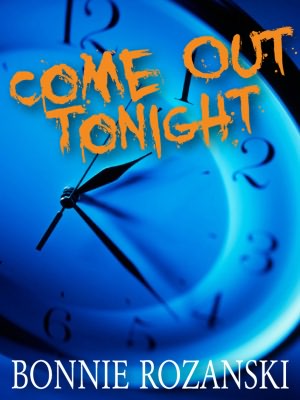
interviewed Bonnie Rozanski about her book Come
Out Tonight and we received an excerpt
from the book to share with readers which we placed at the end of this feature.
Come Out Tonight
 You may have read newspaper reports of zombiish behavior in people
who have taken the sleeping drug called Ambien. These people get up in the
middle of the night to walk, eat, and drive cars in their sleep. The next day
they sometimes find themselves in jail and have no memory of what they had
done. And have you heard, as well, of the patients who wake up after years in a
vegetative state - ten minutes after they’ve been given Ambien? COME OUT
TONIGHT is a gripping psychological thriller inspired by these reports.
You may have read newspaper reports of zombiish behavior in people
who have taken the sleeping drug called Ambien. These people get up in the
middle of the night to walk, eat, and drive cars in their sleep. The next day
they sometimes find themselves in jail and have no memory of what they had
done. And have you heard, as well, of the patients who wake up after years in a
vegetative state - ten minutes after they’ve been given Ambien? COME OUT
TONIGHT is a gripping psychological thriller inspired by these reports.
Henry Jackman, a pharmacist’s assistant working in a run-down drugstore in New
York City, wakes up one morning to find his girl friend unconscious on his
living room rug. Someone has attacked her. He calls an ambulance, and manages
to get her to the hospital alive but comatose. There she progresses from coma
to vegetative state, never quite becoming conscious... until the day Henry
gives her Somnolux, a new-generation sleep aid.
Henry, an insomniac, has himself been taking Somnolux. He has been experiencing
blackouts, something he doesn’t quite admit to, not even to himself. There is
evidence he’s been doing some strange things in his sleep: women’s underwear
turns up in his drawers; sexy women in his bed. Could Henry have attacked his
girlfriend himself without any knowledge of the fact?
Enter Donna Sirken, a no-nonsense, over-worked homicide detective who for
seventeen years has clawed her way up the NYPD ranks to her current position as
Detective Second Grade. “I’d have sworn until this very moment that criminals
are not evil,” Donna tells us. “Sure, they’re violent, lazy, banal, or just
plain bad. They want something for nothing, or their father beat them into a
lifelong resentment against the world ….They grew up poor, abused, or just
plain angry. Something set them on the road to crime, but Evil? C’mon.”
A study of who we truly are, COME OUT TONIGHT is more than a whodunit.
Profound, keenly observed and caustically funny, it will leave you thinking long
after it is done.
After finding out more about Come Out Tonight, Summer of Indie interviewed Bonnie Roanski to find out more about her, and about being an author.
Q
:
Can you tell us how you got started writing?
A:
I wrote when I was a child: poetry and short stories, and continued
sporadically until my mid-twenties when I finished my first novel (it shall
remain nameless). Then I decided that I needed some life experience before I
could produce anything worthwhile. So, I worked in business for quite a few
years, raised my son, getting a few degrees along the way. Finally, when I
finished my last degree, a MS in Computer Science (Artificial Intelligence), I
decided that what I really wanted to do was not go back into computers but to
write. (The first thing I wrote, unsurprisingly, was a play about a robot who
comes to life.)
Q:
Can you tell us more about what inspired your book?
A:
COME OUT TONIGHT was inspired by recent bizarre reports of zombiish behavior in
people who have taken the sleep drug Ambien. These people get up in the middle
of the night to walk, eat and drive cars in their sleep without having any
memory the next day of what they have done. Several months later came even
stranger reports of patients who awakened after years in a vegetative state –
ten minutes after they had been given Ambien. Taken together, these reports
seemed to say that Ambien could somehow unlock the secret to the conscious
self! How could I not write about this? (Though I changed the name of the drug,
naturally.)
By
the way, here’s a link to a NYTimes article on those patients:
Q:
Can you tell us more about your book?
A:
It’s probably easiest if I give you a short summary –
Henry Jackman, a pharmacist’s assistant
working in a run-down drugstore in New York City, wakes up one morning to find
his girl friend unconscious on his living room rug. Someone has attacked her.
He calls an ambulance, and manages to get her to the hospital alive but
comatose. There she progresses from coma to vegetative state, never quite
becoming conscious... until the day Henry gives her Somnolux, a new-generation
sleep aid.
Henry, an insomniac, has himself been taking Somnolux. He has been experiencing
blackouts, something he doesn’t quite admit to, not even to himself. There is
evidence he’s been doing some strange things in his sleep: women’s underwear
turns up in his drawers; sexy women in his bed. Could Henry have attacked his
girlfriend himself without any knowledge of the fact?
Enter Donna Sirken, a no-nonsense, over-worked homicide detective who for
seventeen years has clawed her way up the NYPD ranks to her current position as
Detective Second Grade. “I’d have sworn until this very moment that criminals
are not evil,” Donna tells us. “Sure, they’re violent, lazy, banal, or just
plain bad. They want something for nothing, or their father beat them into a
lifelong resentment against the world…. They grew up poor, abused, or just plain
angry. Something set them on the road to crime, but Evil? C’mon.”
A study of who we truly are, COME OUT TONIGHT is more than a whodunit.
Profound, keenly observed, deftly written, and caustically funny, it will leave
you thinking long after it is done.
Q:
In your book, who is your favorite character?
A: As much as I like Henry, the main
character, I think I have to say my favorite is Donna Sirken, the homicide
detective. She kind of sums herself up in this short monologue early on:
Well, what you see is what you get with me. I ama bossy white woman who won’t back
down. And it took me a lot of years to get to this point. I joined the force as
a beat cop when I was 20. I’m 37, so you do the math. I may have started out an
innocent young recruit, full of self-righteousness and enthusiasm, making the
world safe for humanity. But seventeen long years of scratching my way up the
pole, fighting off the old boys’network, as well as, for that matter, some of
the old boys themselves, has sanded down the self-righteousness, jaded most of
the enthusiasm, leaving, you guessed it: a bossy white woman who won’t back
down.
Donna’s no angel, but she’s real. I
wrote her whole half of the book in about a month, because she practically
dictated it to me.
Q:
What's your favorite book of all time?
A:
Of all time? Nah, I can’t tell you that.
Q:
Who are some of your favorite authors?
A:
I’ve always been very eclectic in my literary tastes. I remember when I was
growing up, loving Pearl S. Buck, A.J. Cronin, James Hilton, and Sinclair
Lewis. More contemporary loves are Phillip Roth, Michael Chabon, Anne Patchett
and Mordechai Richler.
And
I’ve always loved anything medical or scientific. This probably is going to
surprise you, but probably the author who influenced me the most is Michael
Crighton. Up till then I had rarely seen science so effectively and cleverly
incorporated into literature. It inspired me to do research on the brain,
genetics, the Y chromosome, computer networks, and to try to communicate my
fascination with the world of ideas – but in a fictional setting.
Q:
Do you have any advice for new writers?
A:
Go with your passion. Sure, some writers will cash in on YA paranormal romance
or try Dan Brown thriller imitations. They may do sell. And, well, if that’s
your passion, then do it. But if writing what you love is what you want to do,
whether that means coming-of-age thrillers or dystopian science fiction; even
if the agents or publishers tell you that you must write within the category or
to a specific market. The best of writing comes from within. If you love what
you write, the reader will love it, too.
Q:
What's next for you?
A:
I’m currently writing novel about a old physics professor sending her conscious
self thirty years back through time to her younger self. I’ve done a lot of
research on time travel, but most of it doesn’t look very promising, so I gave
up on sending her body back – just her consciousness. It’s fiction, of course,
so I can kind of bend the facts.
Q:
Anything else you'd like to tell us?
 A: I have two
traditionally published books: BANANA KISS and BORDERLINE, both by a small but
fine literary press in Ontario, Canada, where I used to live. BORDERLINE was
shortlisted for Foreword’s YA Book of the Year Award in 2008 and received a
silver medal at the Independent Publishers’ Book Awards in the same year. And I
have four ebooks besides COME OUT TONIGHT, all of which have some kind of
scientific conundrum at their core as well as a wicked sense of humor. One of
them, SIX CLICKS AWAY, was a drama winner of the Red Adept 2010 Indie Awards.
A: I have two
traditionally published books: BANANA KISS and BORDERLINE, both by a small but
fine literary press in Ontario, Canada, where I used to live. BORDERLINE was
shortlisted for Foreword’s YA Book of the Year Award in 2008 and received a
silver medal at the Independent Publishers’ Book Awards in the same year. And I
have four ebooks besides COME OUT TONIGHT, all of which have some kind of
scientific conundrum at their core as well as a wicked sense of humor. One of
them, SIX CLICKS AWAY, was a drama winner of the Red Adept 2010 Indie Awards.
Bonnie
Rozanski is an author and prize-winning playwright currently living in New
Jersey. Born in Queens, New York,
she has lived in Hong Kong, Canada and all over the US. With degrees in
Psychology and Artificial Intelligence, always
fascinated by the human mind, Bonnie writes on matters touching on consciousness
and the human condition.
Except from Come Out Tonight
HENRY
JACKMAN
So,
here’s the story. I get up like usual,
shower, shave, and I’m right in the midst of putting this wad of gel in my hair
when I hear something spooky in the living room: a little like the mewing of a
cat, except I don’t have a cat. I crack
open the bathroom door, and there it is again, only now it sounds more like a
whine. I shuffle out into the hallway,
this wad of gel still stuck on my right index finger, listening. The TV?
The wind? I stick my head in the
living room, and there, under the open window, I see something stretched out on
the floor, something that looks like a person.
I run in, and there she is, dead still, making the mewing noise I heard
before.
“Sherry!” I shout, grabbing her in my arms. ‘What’s the matter?”
But
she doesn’t answer. She’s squealing
softly like a stuck pig. As scared as I am, I know I’m supposed to check her
vitals, so I put two fingers to her wrist and right away pick up a good, strong
beat. Her chest is rising up and
down. So far, so good. Her eyes are shut, but I peel her eyelids
back. Two big black circles stare back
at me, one of them bigger than the other one, probably not a good sign, but
then again, what do I know? Her hair’s
matted with clotted blood, but there’s no open wound that I can see. Looking around, I see this heavy wooden
African statue Mboso brought back from Ghana lying a few feet away from her on
the floor. It looks like it’s got the
sheen of the same sticky stuff that’s coating Sherry’s hair.
The
room looks like it’s seen one hell of a struggle. The floor lamp is knocked to the floor; the
glass on the photo of Sherry and me and the polar bears at the Bronx Zoo is
smashed to smithereens, cabinet doors are open and spilling out paperbacks,
magazines, batteries. From what I can
see, nothing’s taken, but who gives a damn, really, all I’m worrying about is
Sherry, and is she going to be all right.
I shake her a little to bring her to, but she’s out cold. Not dead, I think. Not dead, thank you,
God. I’m thinking the doctors’ll put her
right. I call 911 and give them the
address.
Nine
minutes later the paramedics call from the outside intercom, and I buzz them
in. They don’t bother with the elevator, just run up the three floors with the
stretcher and into the open door of the apartment. Sherry’s still just lying there, splayed out
on the floor, her eyes closed. They
check her airway, breathing, pulse, immobilize her head and spine, ask me a few
questions, then load her onto this long board and strap her in. She’s stable for the most part, they say, but
there could be internal bleeding. Best
thing is get her to the hospital where they can do the necessary tests and
figure the extent of the damage. Don’t
worry, they tell me; she’ll probably wake up in the hospital. Do I want to get dressed and accompany the
patient to the hospital? “Yeah, of
course,” I say. Then I promptly lose my
cool and throw up on my rug. Leaving
the mess where it is, I wipe my mouth on my pajama top, run to the bedroom and
pull on some clothes. I manage to catch
up with the medics on the staircase down, and join them in the back of the
vehicle, cell phone in my pocket and plastic bag in my hand, in case I lose it
again.
I
still can’t get my head around how it happened.
I didn’t even know she was there.
Maybe she came in after I was asleep, I don’t know. Sherry had her own key. And she’s done that before, by the way,
coming in in the middle of the night after I went to sleep. I can’t tell you how many times I found her
in bed with me in the morning, when she wasn’t there when I went to sleep. A couple of times she insisted that I was up
when she came in, and she couldn’t believe I didn’t remember it. But I think what she took for me being awake
was really me picking my head up and saying, “hi” from my sleep, because I sure
never remembered her coming in. Then
again, why we just didn’t live together is another story. I asked her plenty of times, but Sherry
never wanted to give her apartment up; she said she needed her freedom, and
besides, I was just too hard to live with.
As I said, that’s another story.
So
we’re sitting in the back, the siren wailing but the ambulance taking its own
sweet time in getting to St. Vincent’s, when one of the medics asks me what I
think happened. I tell her about the
open window and the statue on the floor.
“Anything
missing?” she asks.
“Don’t
think so,” I say.
“Did
you call the police about the break-in?”
“No. I just called 911...” A big lump rises in my
throat as I look over at Sherry lying there totally still, with an IV in her
arm. “All I care about is her...”
“Just
the same, it’ll have to be reported,” she says.
I
guess I must look like I’m about to throw up again, because she leans over to
put her hand on my shoulder. “You okay?”
“Yeah,
sure.” Then I launch into this long,
disjointed speech about how Sherry’s the best thing to ever happen to me, and
why did this have to happen to her, such a decent person...always supportive,
always complimentary even though all I am, you know, is Pharmacist’s technician
at a rundown Duane Reade drug store on 108th and Broadway, while
she’s this rising star at the big-name Vandenberg Institute. I break down, wiping my eyes on a bunch of
tissues the medic hands me. I ramble on
about how Sherry must have come in the middle of the night, even though I don’t
have any idea how and when she came in....that the night before I had taken a
Somnolux and how I must have slept so soundly I never heard a thing... Poor
Sherry! She must have been scared as
hell and yelling bloody murder, screaming and fighting and calling my
name! How could I have slept through the
whole freaking thing?
By
now we’re gliding into the circle in front of Emergency. The motor cuts out, and I hear the driver
coming around the back. Suddenly, double
doors swing open to the glare of the sun.
I hear someone pulling out the stretcher; and the contraption with the
wheels popping out from under it. By
then I can see the medics wheeling her away.
I slam the doors and run after them.
I try to follow as they carry Sherry on through the ambulance entrance,
but I’m stopped by this heavy-set woman in a white coat and badge, who tells me
in no uncertain terms that only staff is allowed beyond that point. She waves me through the door to the waiting
room. I sit down and, after awhile,
pick up my cell to call the store.
* *
*
It wasn’t till hours later that they let me
see her. I sat in the waiting room until
someone came out and asked me who I was waiting for.
“Someone
will be out soon to ask you some questions,” she said. Soon was another hour when another
white-coated lady came out and got her vital statistics. I kept asking how
Sherry was, but all the lady said was she wasn’t the person to ask, that she
was just there to take information. Then
she went back in, and no one came out for another hour or two. Finally, someone called my name. I looked up.
There was a young man in a white coat, waving to me from the
doorway.
“Is
she all right?” I asked, running over.
“They’re
still doing tests,” he said, “but you can go in and see her now. She’s in Room 410 East wing.”
“But...?”
I said.
“She’s
stable,” he answered, before disappearing into another doorway.
I
took the elevator up and found Room 410 at the end of the corridor. I peeked in.
IV lines and catheters snaked in and out of several parts of Sherry’s
anatomy. Her head was bandaged, except
for a small hole in her head where a tube came out and curved around, coming to an end in a
half-full drainage bag. She had a small
clamp on her finger, measuring her blood oxygen. A machine at the foot of the bed was showing
EEG, EKG, and several other squiggly lines, none flat-lining, thank God. Sherry, lying on her back, seemed to be
staring up at the ceiling. I tiptoed in
till I was hovering over her at the bed rail.
It was very creepy. Her eyes were
closed. She looked either dead or at
peace, I couldn’t tell which.
“Sherry,”
I whispered.
No
response.
“Sherry,”
I tried again, a little louder.
“I
doubt that she can hear you,” came a voice from the door. A young doctor walked in. “Dr. Mehta,” he said, putting out his hand.
“Is
she gonna be all right?” I asked, putting out my own.
“Well,
she’s got a fractured skull, and a small amount of bleeding in the brain. We’ve stabilized it, though, and put in a
ventricular drain. We’re waiting for the
rest of the tests. Are you the boy
friend?”
“Yeah. Henry Jackman. Is she in a coma?”
“Yes. For the moment.” Dr. Mehta walked over to the bed, picking up
Sherry’s limp hand, turning it over, setting it back down beside her.
“When
will she wake up?” I asked.
“How
long do you suppose she’d been lying there?” the doctor asked, instead.
“I
don’t know. I was sleeping.”
“You
didn’t hear anything?” he asked, stroking the soles of her feet.
“No.” I watched Sherry’s chest rise and fall. “Four, five hours, maybe. She was breathing when I found her.”
“That’s
a good sign, of course. She probably
didn’t sustain much hypoxia.”
Hypoxia,
I was thinking. Oh, no.
“Damage
to the brain from too little oxygen,” the doctor explained, straightening up.
“I
know the term, Doctor. I’m a
pharmacist.” I didn’t bother adding the technician
part.
“Really. Well, then you’ll understand the
problem. We’re giving her Cyclosporin A
to counter swelling of the brain. The
blow on the head has already led to defuse traumatic swelling.”
“But
when will she wake up?” I asked again.
He
gave me this sigh before going on for ten minutes on statistics and
probability; how her Glasgow coma scale was 5, and that, of patients in the
range of 5-7, 53% die or remain in a vegetative state; 34% will have moderate
disability and/or good recovery. If she
didn’t open her eyes within a month, prognosis was poor.
“Poor?”
I said, grabbing the bed rail.
“On
the other hand, two-thirds who are unconscious for two weeks or less should
make a moderate to good recovery. How
old is she?”
“Thirty-three,”
I said. “It’s in her chart.”
He
glanced down at the chart hanging on the bedside. “Well, her age is one thing in her favor,” he
said, letting it drop back down. Then he
shook my hand again and left.
I
stood there gazing at Sherry for another half an hour. It was hard to see her so lifeless when in my
mind she was still the way she had always been: smart and funny and wise.
Like
the time we were walking through the Museum of Natural History. We had started in dinosaurs, of course, but
ended up in insects, staring through a glass case at a colony of leaf-cutter
ants.
“They’re
all sisters, you know,” Sherry said, watching a conga line of ants marching up
a stem, each waving a piece of leaf.
“Identical twins, really.”
“What
a dull life,” I said. “Cutting leaves,
carrying leaves, day in day out.
Ugh.”
“That’s
what they do. They don’t think about
it. They just do it.”
We
watched for another ten minutes. The
colony was fascinating: little robots marching back and forth, tending a crop
of bacteria that fed on the leaves, a farm so organized and smooth-working
you’d think someone was in charge. A
million little cogs, each mindlessly doing its job, adding up miraculously
to....a single thing.
“You’d
almost think it had a soul,” I marveled.
“They
call it a hive mind,” Sherry said. “A
group mind with a single consciousness occupying many bodies.”
“But
how can that be?” I asked, laughing at the strangeness of it. “How could there be one mind with so many
bodies?”
“Who
says there has to be one mind per body?” Sherry said, laughing, too.
That
was the Sherry I wanted, not the one lying in bed, her hair in a knot, mouth open
and drooling, eyes to the ceiling. I
prayed to God that the old Sherry was not gone forever.

 Summer of Indie's next
guest author is sometimes called "the female version of Stephen
King". Today, we welcomed supernatural suspense author Vanessa Morgan to
talk with us about her black comedy and thriller screenplay, A Good Man, which fans of Dexter or American Psycho
may to love.
Summer of Indie's next
guest author is sometimes called "the female version of Stephen
King". Today, we welcomed supernatural suspense author Vanessa Morgan to
talk with us about her black comedy and thriller screenplay, A Good Man, which fans of Dexter or American Psycho
may to love.  Louis
Caron is a good man - vegetarian, he feeds the homeless, takes care of animals
and is concerned with the ecological future of the planet. But his altruism has
a sinister edge - he's a vampire - and local inspector Taglioni is becoming
increasingly suspicious. Louis' attempt to escape the police takes him on a
journey into his own private hell where he is not only forced to confront his
worst fears, but also to destroy the lives of those he cares about most.
Louis
Caron is a good man - vegetarian, he feeds the homeless, takes care of animals
and is concerned with the ecological future of the planet. But his altruism has
a sinister edge - he's a vampire - and local inspector Taglioni is becoming
increasingly suspicious. Louis' attempt to escape the police takes him on a
journey into his own private hell where he is not only forced to confront his
worst fears, but also to destroy the lives of those he cares about most. Author and screenwriter Vanessa Morgan has published two books of supernatural suspense,
Drowned Sorrow and The Strangers Outside, and one screenplay, A Good Man. All
of her work has either been turned into a film or is in preproduction. Vanessa
is also the creator of the web comic Avalon, a cute cartoon series about her
cat. She lives in Belgium where she is at work on seven new book and movie
projects.
Author and screenwriter Vanessa Morgan has published two books of supernatural suspense,
Drowned Sorrow and The Strangers Outside, and one screenplay, A Good Man. All
of her work has either been turned into a film or is in preproduction. Vanessa
is also the creator of the web comic Avalon, a cute cartoon series about her
cat. She lives in Belgium where she is at work on seven new book and movie
projects.